
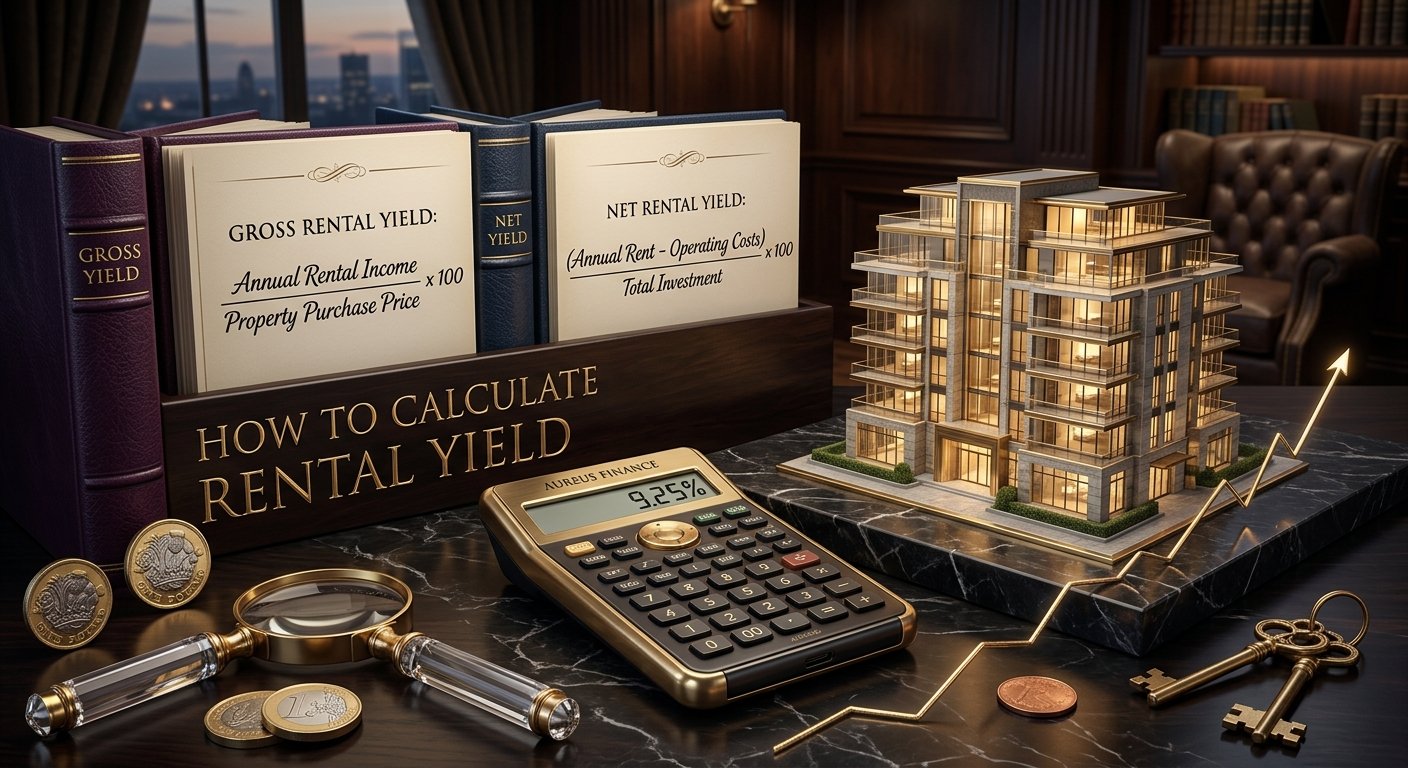
How to Calculate Rental Yield on a Hurghada Property
How to Calculate Rental Yield is one of the most important skills for anyone considering a property investment in Hurghada. Rental yield helps investors estimate how much rental income a property could generate compared with the amount invested in purchasing and operating it.
For a Hurghada property, however, calculating rental yield is more than dividing annual rent by the purchase price. Investors should also consider occupancy, seasonal rental demand, maintenance, property management, furnishing, service charges, and other ongoing expenses.
This guide explains how to calculate rental yield, the difference between gross and net rental yield, how to calculate yield for short-term and long-term rentals, and which factors can affect your potential return in Hurghada.
How to Calculate Rental Yield: The Basic Formula
The basic rental yield formula is:
Rental Yield (%) = (Annual Rental Income ÷ Property Purchase Price) × 100
For example, if you purchase an apartment in Hurghada for EGP 4,000,000 and it generates EGP 240,000 in rental income per year:
EGP 240,000 ÷ EGP 4,000,000 × 100 = 6%
The property’s estimated gross rental yield would therefore be 6%.
This calculation provides a useful starting point, but it does not account for expenses or periods when the property is vacant.
What Is Gross Rental Yield?
Gross rental yield measures rental income before deducting property expenses.
The formula is:
Gross Rental Yield = (Annual Gross Rent ÷ Property Purchase Price) × 100
For example:
| Investment | Amount |
|---|---|
| Property purchase price | EGP 4,000,000 |
| Monthly rent | EGP 20,000 |
| Annual rent | EGP 240,000 |
| Gross rental yield | 6% |
Gross yield is useful when comparing several properties quickly, but it should not be treated as your actual profit.
What Is Net Rental Yield?
Net rental yield gives a more realistic picture because it accounts for expenses associated with owning and operating the property.
The basic formula is:
Net Rental Yield (%) = (Annual Rental Income − Annual Property Expenses) ÷ Total Investment Cost × 100
Potential expenses may include:
Property management
Maintenance
Service and maintenance charges
Repairs
Furniture replacement
Cleaning
Utilities, depending on the rental arrangement
Marketing or booking costs
Insurance, where applicable
Periods of vacancy
Other property-related expenses
For example, if a Hurghada apartment generates EGP 240,000 per year but has EGP 50,000 in annual operating expenses:
EGP 240,000 − EGP 50,000 = EGP 190,000 net rental income
If the total investment cost is EGP 4,000,000:
EGP 190,000 ÷ EGP 4,000,000 × 100 = 4.75% net rental yield
This is why investors should compare both gross and net yield before purchasing.
How to Calculate Rental Yield for a Hurghada Property
When calculating rental yield in Hurghada, start by collecting five important numbers:
Property purchase price
Expected rental rate
Expected occupancy
Annual operating expenses
Total acquisition cost
For example, imagine a furnished one-bedroom apartment costing EGP 4,500,000.
Suppose the expected average rental income is EGP 25,000 per month when occupied.
If you assume 80% annual occupancy:
EGP 25,000 × 12 × 80% = EGP 240,000 annual rental income
Gross rental yield:
EGP 240,000 ÷ EGP 4,500,000 × 100 = 5.33%
You can then deduct operating expenses to estimate the net yield.
The actual rental income will depend on the property’s location, size, condition, furnishing, facilities, view, rental strategy, and market demand.
Rental Yield Calculation Schedule
A simple annual rental yield schedule can help investors understand the numbers more clearly.
Example: Hurghada Investment Apartment
| Item | Annual Amount |
|---|---|
| Property price | EGP 4,500,000 |
| Advertised monthly rent | EGP 25,000 |
| Maximum annual rent | EGP 300,000 |
| Assumed occupancy | 80% |
| Estimated rental income | EGP 240,000 |
| Operating expenses | EGP 50,000 |
| Estimated net income | EGP 190,000 |
| Gross yield | 5.33% |
| Net yield | 4.22% |
This example demonstrates why occupancy and expenses matter when calculating rental returns.
These figures are illustrative rather than guaranteed market returns. Investors should use current rental quotations and actual property expenses for the specific unit they are considering.
How Occupancy Rate Affects Rental Yield
Occupancy is particularly important for holiday properties in Hurghada.
A property advertised at a high nightly rate does not necessarily produce a high annual return if it remains vacant for long periods.
For example, assume a property can generate an average of EGP 2,000 per occupied night.
50% Occupancy
Approximately 183 occupied nights:
EGP 2,000 × 183 = EGP 366,000
70% Occupancy
Approximately 256 occupied nights:
EGP 2,000 × 256 = EGP 512,000
85% Occupancy
Approximately 310 occupied nights:
EGP 2,000 × 310 = EGP 620,000
This demonstrates how occupancy can have a major effect on annual rental income.
Investors should therefore evaluate both average rental rate and realistic occupancy, rather than focusing only on the highest possible nightly rate.
Short-Term vs Long-Term Rental Yield in Hurghada
One of the most important decisions for a Hurghada property investor is whether to target short-term holiday rentals or long-term tenants.
Short-Term Rentals
Short-term rentals can potentially generate higher income during periods of strong tourism demand.
Advantages may include:
Higher nightly rates
Flexibility to use the property personally
Potentially higher income during peak seasons
Ability to adjust prices according to demand
However, they may also involve:
Higher management costs
Cleaning expenses
More frequent maintenance
Variable occupancy
Seasonal demand
Booking and marketing costs
Long-Term Rentals
Long-term rentals may provide more predictable monthly income.
Advantages include:
More stable occupancy
Less frequent tenant turnover
Lower management workload
More predictable cash flow
The monthly rental rate may be lower than the potential short-term income during peak tourist periods.
The right strategy depends on the property’s location, facilities, target tenants, and the owner’s investment objectives.
Factors That Affect Rental Yield in Hurghada
Rental yield can vary significantly from one property to another.
Location
Properties close to beaches, promenades, restaurants, shopping areas, and tourist attractions may have stronger rental demand.
Popular areas considered by investors include:
El Mamsha
Sheraton
Arabia
Magawish
Al Ahyaa
Sahl Hasheesh
Makadi Bay
Soma Bay
The specific location within an area is also important. Distance from the beach, accessibility, views, resort facilities, and surrounding developments can all affect rental demand.
Property Type
Studios and one-bedroom apartments can appeal to couples, solo travelers, and holiday renters, while larger apartments may target families and groups.
Sea View and Beach Access
Properties with attractive sea views, beachfront access, pools, or resort amenities can command different rental rates from comparable units without these features.
Furnishing and Condition
A modern, fully furnished property may be more attractive to holiday renters and can potentially justify a higher rental rate.
Seasonality
Hurghada’s rental market can experience different levels of demand throughout the year.
Investors should avoid calculating annual yield using only peak-season rental rates.
Instead, estimate:
Peak-season income + shoulder-season income + low-season income = Estimated annual rental income
This produces a more realistic projection.
How to Calculate Rental Yield Including Purchase Costs
For a more accurate investment calculation, consider the total cost of acquiring the property rather than only the advertised property price.
Your calculation may include:
Property price + furniture + legal costs + registration costs + applicable fees + initial setup costs = Total investment cost
For example:
| Cost | Example |
|---|---|
| Property price | EGP 4,000,000 |
| Furniture | EGP 250,000 |
| Initial setup | EGP 50,000 |
| Other applicable costs | EGP 100,000 |
| Estimated total investment | EGP 4,400,000 |
If annual rental income is EGP 264,000:
EGP 264,000 ÷ EGP 4,400,000 × 100 = 6% gross yield
Using the total investment cost can provide a more realistic comparison between properties.
Actual transaction costs vary, so buyers should confirm applicable fees before completing a purchase.
How Payment Plans Affect Rental Yield
Investors buying off-plan property often use developer installment plans.
It is important to distinguish between rental yield and cash-on-cash return.
Rental yield generally compares annual rental income with the property’s cost or value.
Cash-on-cash return looks at the income generated relative to the actual cash the investor has contributed.
For example, a buyer may purchase a property through a payment plan with a 20% down payment and installments over several years. The buyer’s initial cash investment is lower, but the total purchase price may be higher than the cash price.
Therefore, investors should compare:
Cash price
Installment price
Down payment
Remaining installments
Delivery date
Expected rental income after delivery
Total acquisition cost
This helps determine whether a payment plan makes financial sense.
Rental Yield vs Capital Appreciation
Rental yield is not the only measure of property investment performance.
A property can generate rental income while also increasing in market value over time.
For example, an investor may benefit from:
Rental income + potential capital appreciation = Overall investment potential
However, future property appreciation is not guaranteed. Investors should avoid assuming that a property will automatically increase in value.
Location, infrastructure, supply and demand, project quality, developer reputation, and wider economic conditions can all affect future prices.
What Is a Good Rental Yield in Hurghada?
There is no single rental yield percentage that makes a property a good investment.
A property offering a higher yield may come with higher management requirements, weaker resale demand, greater vacancy risk, or a less desirable location.
A lower-yield property in a strong beachfront or established area may offer other advantages, such as better liquidity, personal-use potential, or long-term appreciation prospects.
Instead of asking only:
“What is the rental yield?”
Investors should ask:
“What is the net yield after expenses, and does the return justify the purchase price and investment risk?”
Common Rental Yield Calculation Mistakes
Avoid these common mistakes when evaluating a Hurghada property:
Using Peak-Season Rent for the Entire Year
Do not assume the highest nightly rate applies for 365 days.
Ignoring Vacancy
Even attractive properties can experience vacant periods.
Forgetting Operating Expenses
Maintenance, management, cleaning, and service charges can reduce net income.
Calculating From the Advertised Price Only
Consider the total acquisition and setup cost.
Comparing Different Rental Strategies
A short-term holiday rental and a long-term lease should not be compared using the same assumptions.
Assuming Guaranteed Returns
Rental income and occupancy can change according to market conditions.
Rental Yield Calculator: Simple Formula
You can use this simple calculation when comparing Hurghada properties:
Step 1: Estimate monthly rental income.
Step 2: Multiply monthly income by 12.
Step 3: Adjust for expected occupancy.
Step 4: Subtract annual operating expenses.
Step 5: Divide the resulting net income by your total investment cost.
Step 6: Multiply by 100.
Formula
Net Rental Yield = [(Annual Rental Income × Occupancy Rate) − Annual Expenses] ÷ Total Investment Cost × 100
This formula gives investors a more realistic starting point for comparing potential rental investments.
How to Maximize Rental Yield on a Hurghada Property
After purchasing a property, several strategies may help improve rental performance:
Use professional property photography
Furnish the property to a high standard
Keep the apartment well maintained
Use competitive seasonal pricing
Target the right rental audience
Reduce unnecessary vacancy periods
Work with an experienced property manager
Offer reliable guest communication
Highlight nearby beaches and attractions
Review rental prices regularly
Small improvements in occupancy, pricing, and guest experience can have a significant effect on annual rental income.
Final Thoughts on How to Calculate Rental Yield
Learning how to calculate rental yield allows property buyers to compare investment opportunities using numbers rather than relying only on advertised rental returns.
For a Hurghada property, start with the expected annual rental income and calculate the gross yield. Then account for occupancy, maintenance, management, service charges, furnishing, and other expenses to estimate the net yield.
The strongest investment decision is not necessarily the property with the highest advertised yield. Instead, look at the complete picture: location, purchase price, payment plan, rental demand, occupancy, expenses, property quality, delivery date, and potential long-term value.
Before buying, compare several properties using the same assumptions and request realistic rental projections based on comparable units in the same area.
Find a Hurghada Property With Strong Investment Potential
Looking for a property in Hurghada that combines a suitable purchase price with rental potential?




Join The Discussion