

High-Potential Real Estate Project: 7 Smart Ways to Identify a Worthwhile Investment
A High-Potential Real Estate Project is more than a development with attractive architecture, modern amenities, or an appealing launch price. A genuinely promising project combines a suitable location, real market demand, competitive pricing, a reliable developer, and realistic financial projections. Understanding these factors helps investors evaluate opportunities based on evidence rather than marketing promises.
Whether you are considering a residential apartment, a resort property, or an off-plan development, identifying a High-Potential Real Estate Project requires careful research into rental demand, operating costs, legal documentation, and long-term resale prospects.
In this guide, we explain seven essential ways to evaluate a High-Potential Real Estate Project, assess its financial feasibility, recognize potential risks, and decide whether it fits your investment goals.
1. Evaluate the Location of a High-Potential Real Estate Project
Location is one of the most important factors when assessing a High-Potential Real Estate Project because it influences accessibility, buyer interest, rental demand, and long-term marketability.
A project may offer attractive finishes and competitive prices, but its investment performance can be limited if the surrounding neighborhood lacks essential services, convenient transportation, or a reliable base of potential residents and tenants.
Start by examining these location factors:
Accessibility: Review road connections, public transportation, airport access, and travel times to important destinations.
Essential services: Consider proximity to healthcare facilities, supermarkets, schools, restaurants, and commercial centers.
Economic activity: Investigate employment opportunities, business activity, and the area’s ability to attract permanent residents.
Infrastructure development: Review confirmed improvements to roads, utilities, transportation networks, and public spaces.
Neighborhood conditions: Assess existing construction, occupancy levels, maintenance standards, and available amenities.
Future development can create investment opportunities, but announced projects should not automatically be treated as evidence of future appreciation. Check whether proposed infrastructure has received the necessary approvals, secured funding, or entered construction.
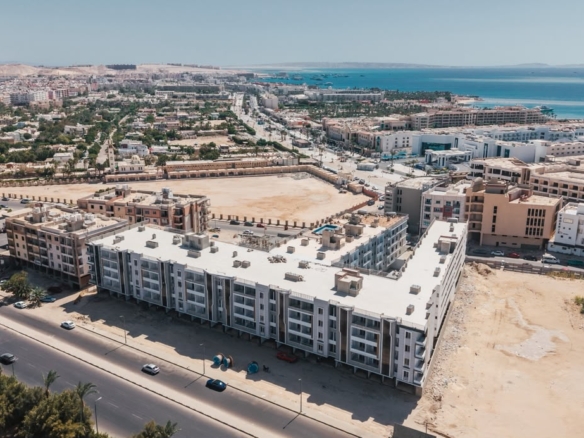
For investors considering Hurghada, the best location depends on the intended use of the property. An apartment near beaches, restaurants, and leisure facilities may appeal to holidaymakers, while a property with convenient access to everyday services may suit longer-term tenants.
A High-Potential Real Estate Project should offer location advantages that match the needs of its intended buyers or tenants, rather than relying exclusively on claims about an area’s popularity.
2. Analyze Market Demand and Competition
A High-Potential Real Estate Project needs a clearly defined target market. Strong sales activity during a launch does not necessarily mean the property will attract consistent rental demand or remain easy to resell.
First, identify the project’s intended audience. Is it designed for families, professionals, first-time buyers, holidaymakers, or investors seeking rental income?
Next, examine whether the property’s features, size, and price match that audience.
Useful indicators include:
Rental demand and achievable rents for comparable properties.
Occupancy rates and vacancy periods.
Recent comparable sales and resale activity.
The number of competing developments in the same area.
Unsold inventory and the volume of new units entering the market.
Tenant preferences regarding furnishing, property size, facilities, and location.
Comparing similar properties is particularly important. A studio in a resort development should generally be evaluated against comparable studios with similar locations, views, facilities, completion status, and management arrangements.
Oversupply can weaken investment performance even when the wider area continues to develop. If several projects offer similar units to the same audience, investors may face stronger competition, longer vacancy periods, or pressure to reduce rental prices.
Seasonality also matters. In holiday destinations such as Hurghada, rental income may be concentrated in certain months. A reliable assessment should account for the full year instead of relying only on peak-season performance.
When evaluating a High-Potential Real Estate Project, look for evidence of sustainable demand rather than assuming that every new development will attract enough buyers or tenants.
3. Assess the Financial Potential of a High-Potential Real Estate Project
A project’s advertised price or projected return does not provide enough information to determine whether it is financially attractive.
A proper evaluation of a High-Potential Real Estate Project should consider acquisition costs, ongoing expenses, expected rental income, financing obligations, and the possibility of selling the property later.
Calculate the Gross Rental Yield
Gross rental yield provides an initial way to compare rental properties.
Gross rental yield = Annual rental income ÷ Property purchase price × 100
For example, assume an apartment costs EGP 3,000,000 and generates EGP 240,000 in annual rental income.
Gross rental yield = EGP 240,000 ÷ EGP 3,000,000 × 100 = 8%.
This is an illustrative calculation, not a prediction of actual rental performance.
Estimate the Net Rental Yield
Gross yield does not account for the expenses involved in operating the property. To estimate net performance, deduct applicable operating costs, including:
Property management fees.
Maintenance and service charges.
Insurance and taxes where applicable.
Repairs, utilities paid by the owner, and furnishing replacement.
Vacancy periods and other rental-related expenses.
Net operating income = Rental income − Operating expenses
Net rental yield = Annual net operating income ÷ Total property investment cost × 100
For example, if the apartment generates EGP 240,000 annually and its operating expenses total EGP 60,000, the annual net operating income is EGP 180,000.
Using the EGP 3,000,000 purchase price alone, the resulting yield is 6%. If additional acquisition costs apply, the yield calculated against the complete investment cost will be lower.
Mortgage interest and other financing expenses should also be assessed when evaluating cash flow and the investor’s overall return.
Compare Different Investment Scenarios
A High-Potential Real Estate Project should be evaluated using conservative, moderate, and optimistic financial scenarios.
The conservative scenario should account for lower rental income, slower occupancy, higher expenses, delayed completion, and limited appreciation. The moderate scenario should reflect evidence from comparable properties, while the optimistic scenario can consider stronger demand and favorable market conditions.
Compare projected cash flow, financing obligations, operating expenses, and potential resale value. An investment that remains manageable under less favorable conditions may be more resilient than one that depends on uninterrupted occupancy and rapid price growth.
4. Verify the Developer’s Reputation and Delivery Record
The developer’s ability to complete and maintain a project is an important consideration, particularly when buying off-plan.
Before investing in a High-Potential Real Estate Project, investigate the developer’s previous projects and look for evidence of actual delivery rather than relying exclusively on promotional materials.
Consider the following factors:
Delivery history: Were previous developments completed according to their stated schedules?
Construction quality: Do completed properties demonstrate consistent workmanship and suitable materials?
Financial and operational capacity: Does the developer appear capable of funding and managing the project through completion?
After-sales service: How are defects, maintenance requests, and buyer concerns handled?
Existing buyer feedback: Look for recurring complaints about delays, quality, or contractual obligations.
Where possible, visit a completed development and speak with existing owners or property managers.
A strong reputation can provide useful evidence, but it does not guarantee that a new project will be completed on time or achieve its projected investment returns. Each development should be evaluated based on its own documentation, financing arrangements, construction progress, and contractual terms.
A High-Potential Real Estate Project should have a delivery plan that can be examined and verified, not just an attractive sales presentation.
5. Check Legal Documentation and Project Approvals
Legal due diligence helps investors establish whether a property can be purchased and used under the expected conditions.
Before signing an agreement or paying a substantial deposit, obtain independent confirmation of the relevant legal documents.
Depending on the transaction, these may include:
Ownership documents and the seller’s authority to sell.
Applicable land allocation and title documentation.
Construction permits and relevant planning approvals.
The project’s legal status and any restrictions on property use.
The sale agreement, payment schedule, and handover conditions.
Any existing mortgages, encumbrances, or other obligations affecting the property.
For resale properties, the ownership history and the seller’s right to transfer the property deserve particular attention.
For off-plan purchases, review the agreed completion date, provisions covering delays, cancellation and refund conditions, and the consequences of missed payments. Confirm what rights the buyer receives before and after completing the payment schedule.
Investors purchasing in Egypt can consult the Official Egyptian Real Estate Platform at https://realestate.gov.eg/ as a starting point for researching property information. This should not replace independent verification of the specific property’s legal status.
A qualified local real estate lawyer can explain the relevant documents and identify contractual risks before the buyer commits.
Legal verification is an essential part of evaluating a High-Potential Real Estate Project because attractive projected returns cannot compensate for unresolved ownership or approval issues.
6. Examine Design, Facilities, and Long-Term Usability
A project’s physical design can influence its appeal to potential occupants and its ongoing operating costs.
However, the number of facilities or the visual quality of a brochure does not necessarily indicate strong investment potential. The more important question is whether the design supports the needs of the intended market.
Evaluate the Property Layout and Construction
Consider room proportions, storage, natural light, ventilation, privacy, and the practical use of the available floor area.
Review construction materials, workmanship, durability, and maintenance requirements. In coastal environments, consider whether materials and building systems are appropriate for local weather conditions.
Assess the Value of Amenities
Swimming pools, landscaped areas, gyms, parking, security, and reception services may contribute to a property’s appeal.
Their investment value depends on whether the target market actually uses them and whether the costs of maintaining them are reasonable.
A development with extensive facilities may require higher service charges, which can reduce net rental income.
Review Property Management
Understand who will manage the development after handover, how maintenance fees are determined, and which services are included.
For rental investments, establish whether property management is available, what fees apply, and whether any rental program has specific contractual conditions.
A High-Potential Real Estate Project should balance occupant appeal with practical operation, maintenance, and affordability.
7. Review Payment Plans, Completion Risks, and Exit Options
The payment structure can influence how much capital an investor needs initially and how much financial pressure the purchase creates over time.
When assessing a High-Potential Real Estate Project, compare the complete payment terms rather than choosing an offer simply because it advertises a small deposit or a long installment period.
Review the following details:
Initial deposit and every scheduled installment.
Total purchase price and additional administrative or financing charges.
Payment deadlines and any large final payment.
Construction milestones and the expected handover date.
Contractual consequences of late payment or delayed completion.
Conditions affecting cancellation, refunds, and ownership transfer.
A longer payment plan may preserve liquidity, but it can also extend the period during which the investor must meet financial obligations.
For off-plan properties, consider whether you can continue paying if construction is delayed or rental income begins later than expected.
Exit strategy is equally important. Consider who might buy or rent the property in the future, how many competing units could be available, and whether the property is suitable for resale under less favorable market conditions.
A project may appear profitable on paper but still be difficult to exit if demand is limited or the asking price exceeds comparable market values.
Before committing, calculate the full investment cost, retain an emergency reserve, and confirm that the payment schedule remains affordable without depending on guaranteed appreciation or uninterrupted rental income.
How to Compare a High-Potential Real Estate Project With Other Investments
When comparing a High-Potential Real Estate Project with competing developments, examine the complete financial and practical picture rather than focusing on the advertised price alone.
Compare the following:
Price per square meter: Assess comparable properties with similar locations, views, finishing, and completion status.
Payment structure: Compare deposits, installments, payment duration, and additional charges.
Rental performance: Estimate achievable rental income and deduct operating expenses.
Location advantages: Evaluate access to transport, employment, beaches, commercial areas, and essential services.
Developer reliability: Investigate delivery history, construction quality, and after-sales service.
Resale prospects: Consider future competition, buyer demand, and the potential time needed to sell.
These comparisons help investors understand whether a project’s advantages justify its price and financial commitments.
The strongest option is not necessarily the cheapest development. It is the one whose price, demand, operating costs, and risk profile make sense for the investor’s goals and financial circumstances.
Is a High-Potential Real Estate Project Suitable for Your Budget?
A High-Potential Real Estate Project should fit your financial position as well as your investment objectives.
Before committing, calculate the initial deposit, future installments, operating expenses, furnishing costs, and emergency reserves you will need.
Consider how the investment would perform if rental income were delayed, occupancy declined, construction took longer than expected, or unexpected repairs increased expenses.
Avoid using every available saving for the initial deposit. Maintaining sufficient liquidity can help you manage unexpected expenses without missing scheduled payments or relying on expensive borrowing.
Investors should also distinguish between the property’s expected performance and their personal ability to carry the investment. A development may have promising market characteristics but still be unsuitable for someone whose income cannot comfortably support the payment schedule.
A High-Potential Real Estate Project is a more suitable candidate when its financial commitments remain manageable under realistic conditions.
Final Checklist for Identifying a High-Potential Real Estate Project
Before making a final decision, use this checklist to review the main investment considerations:
The location has practical advantages and credible demand drivers.
The target buyer or tenant market is clearly identified.
Comparable sales and realistic rental estimates support the proposed price.
Competing developments and potential oversupply have been considered.
The developer’s delivery history and construction progress have been investigated.
Relevant legal documents and project approvals have been independently reviewed.
Maintenance fees, operating costs, and additional purchase expenses are understood.
The payment schedule fits the investor’s available funds and income.
Conservative financial scenarios have been tested.
There is a realistic rental, resale, or long-term ownership strategy.
No single factor can guarantee that a real estate investment will succeed. Location, demand, pricing, developer reliability, legal status, and financial feasibility must be assessed together.
Conclusion: Choose Real Estate Based on Evidence, Not Promises
Identifying a High-Potential Real Estate Project requires a structured assessment of both opportunities and risks. Attractive design, modern facilities, and flexible payment plans may be appealing, but they should support an investment case grounded in market evidence and realistic financial assumptions.
By examining location, demand, rental potential, developer credibility, legal documentation, construction quality, and exit options, investors can make more informed comparisons between competing developments.
The strongest investment decision is not necessarily the property with the lowest price or the most ambitious projected return. It is the opportunity whose costs, risks, and potential benefits remain reasonable after careful independent evaluation.




Join The Discussion